Fidel Castro would have been amused by an unexpected encomium from the belly of the beast on the eve of his birth centenary. Even the title of last month’s US State Department 100-page diatribe, Cuba: The Capital of 21st Century Communism, could be interpreted as a tribute. Like much else in a report intended to make the case for state capitulation or capture, this is an egregious exaggeration. The idea, obviously, is to illustrate how a small Caribbean island has posed an unacceptable threat to US ‘national security’ for nearly 70 years, and why that nuisance must be eliminated. Yet the supporting text is not mere fiction. Chunks of it could be read as an explanation for why Cuba proved so influential internationally in the decades after the 1959 revolution spearheaded by Castro.A few examples from the report follow: “While Soviet communism was frequently driven by more practical great-power concerns … its Cuban successor was built around a near-singular obsession with the ‘liberation’ of the Global South from its Western colonial oppressors. In the minds of the Cubans, there was only one path to this goal: the destruction of the Yankee imperialist regime.” This ‘obsession’ deserves a red salute.
Fidel Alejandro Castro Ruz (13 August 1926 – 25 November 2016)
It acknowledges that “the Cubans were never just a Soviet proxy”, that “the Cuban Marxist project not only survived, but thrived” following the USSR’s demise and China’s turn towards capitalism, and that “Castro’s ideological project now enjoys something approaching ideological hegemony in leftist circles both within and beyond the West”. Apart from Washington’s hege-morons, no one associates the concept of hegemony, ideological or otherwise, with Cuba — except as an appropriate target in its internationalist endeavours over the decades.
Yet it’s hard to disagree with the report’s contention that “For the Western left — particularly in the United States — Cuba was the harbinger of a new kind of revolution. It was animated by a missionary zeal that Moscow had long since forgotten, and offered a novel theory of struggle and liberation”. As evidence, it cites the concept of ‘tercermundismo’, or ‘Third Worldism’, and highlights the 1966 Tricontinental Conference in Havana as “a foundational event in the inauguration of [this] global revolutionary project” that brought together anti-imperialist representatives from 82 nations across Asia, Africa and Latin America.
“In Cuba’s telling,” the report claims, “the oppressed peoples of the world ... all shared one enemy … Yankee imperialism.” That’s not far from the truth. It notes that in urging “revolutionaries to open up a hundred fronts of war against the American empire”, Che Guevara in his message to the conference was urging on not just rebels in the Global South but also “American radicals in the belly of the beast”. It’s unlikely Che would have disputed that imputation. Neither he nor Fidel have challenged the claim that the Soviets “were speaking Third Worldism as a second language. The Cubans spoke it as their native tongue”. That could be explained by their direct experience of US imperialism in the six decades preceding Castro’s revolution.
The State Department report is aimed at maligning almost every progressive movement in the US — from the Black Panthers to Antifa — by linking it to Cuban influence. To the extent that is true, that would be a triumph for Havana. It also provides another cause for kudos by admitting that “a particular affinity for the cause of ‘Palestinian liberation’ was embedded in the founding anti-imperialist and anti-Western creed of the Cuban revolution”. That alone could be seen as an excellent reason for supporting Cuba in its global endeavours as far away as southern Africa, where Havana’s contribution in Angola abbreviated the lifespan of Western-backed Pretorian apartheid, as Nelson Mandela acknowledged.
On January 15, 1966 Fidel Castro gave his famous speech at the Chaplin Theater in Havana, Cuba to conclude the Tricontinental Conference which saw the founding of the Organization of Solidarity with the People of Asia, Africa and Latin America (OSPAAAL). Source: Granma International/
Cuba has often floundered on the domestic front, despite tremendous achievements in, inter alia, education and healthcare. During his first campaign, in 2016, Donald Trump declared, “I love the poorly educated.” Fidel Castro and his comrades detested the idea of any Cuban being poorly educated, and remedied the ignorance bred by their US-friendly predecessors. That partly explains Cuba’s resilience in the face of 65 years of economic and military aggression from the north. Its survival thus far amid the imperial denial of fuel, food and medicine has been nothing short of a miracle, but it’s not the first Cuba has accomplished.
Whatever Cuba’s fate, the memories of ‘fidelismo’ will linger, its ghost hovering over the latest spoils of US imperialism. And, sooner or later, history shall absolve him, as Castro predicted back in 1953.
This article was first published under the title “Fidel’s century" in Dawn, an ANN partner of The Daily Star, on August 12, 2026.
Every night, when most of Dhaka is winding down, Karwan Bazar comes alive. Trucks loaded with vegetables, fish and fruit crowd its narrow lanes, traders negotiate prices and buyers hurry to secure the day’s supplies
15 Aug 2026, 11:33 AM - Long Reads
Which female-dominated jobs are actually the most exposed to AI?
As the impacts of artificial intelligence (AI) sweep across the labour force, it’s understandable for workers to be concerned about which jobs are most at risk of being replaced by technology.
15 Aug 2026, 11:29 AM - Long Reads
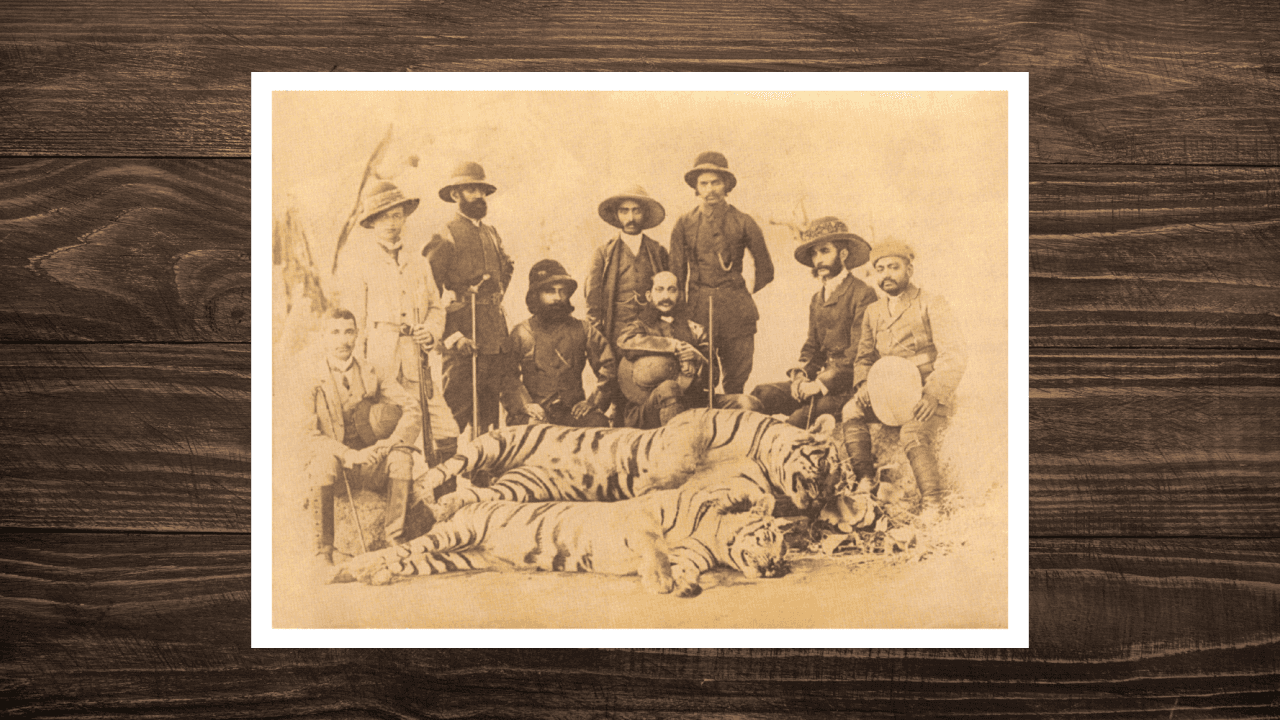
Bangladesh's visual history / The enduring allure of vintage photographs
It all started quite by accident. In 1981, while visiting the renowned Metropolitan Museum of Art in New York, USA, where the Festival of India was being held, I came across some remarkable vintage photographs of British India and the Princely States on display. As I stood transfixed in front of a large, attractive photograph of an Indian potentate of yore, a gorgeously attired old Maharajah who stared balefully at the camera, a thought struck me. Would it be possible to locate, retrieve, collect, identify, faithfully restore and research vintage photographs in Bangladesh? I was, of course, aware that, given the climatic conditions in our deltaic country, which are averse to any sort of preservation, let alone the survival of vintage photographs, it would be very difficult to find them in good condition.
15 Aug 2026, 11:28 AM - Long Reads
More From This Reporter
2 hrs ago - Opinion
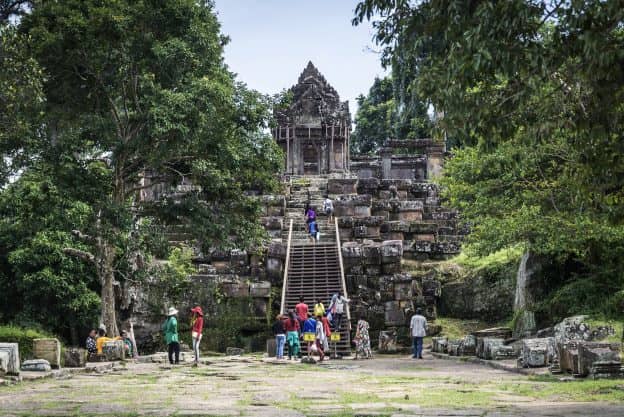
Southeast Asia’s Border Disputes: Wars in Waiting?
15 Aug 2026, 11:29 AM - Long Reads
Which female-dominated jobs are actually the most exposed to AI?
15 Aug 2026, 11:17 AM - Opinion
Post July uprising, Bangladesh has rediscovered 1947 – but forgotten those uprooted by Partition
15 Aug 2026, 11:10 AM - Feature
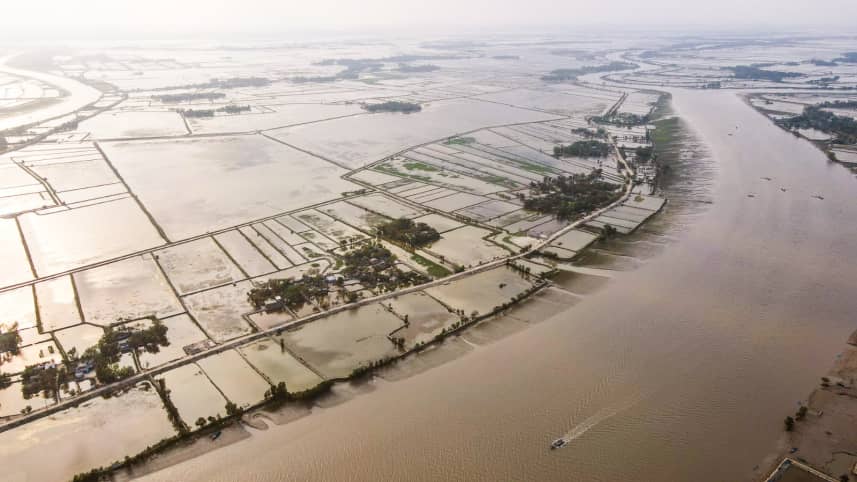
Salinity creeps deeper into southwest
15 Aug 2026, 10:55 AM - Opinion
Britain and America's 'Special Relationship' Is a Myth Built on Power, Not Partnership